
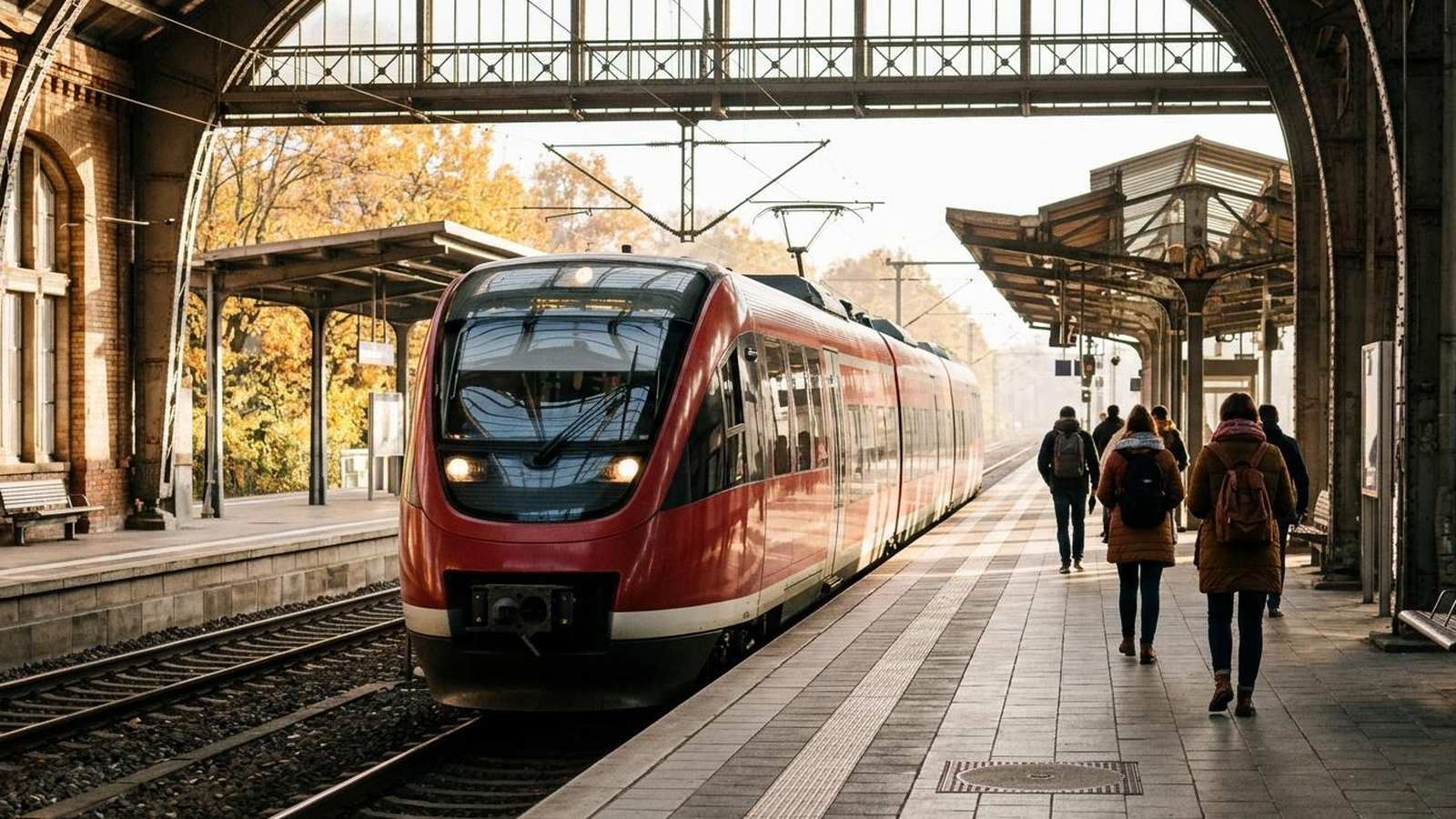
Deutschlandticket 2027 brings a confirmed price increase to €66.80 per month starting January 1, 2027, alongside an urgent November 30, 2026 confirmation deadline for existing Deutsche Bahn subscribers. Whether you are an Indian student preparing for the Summer 2027 intake, a skilled professional arriving on an EU Blue Card, or a tourist planning winter and spring rail trips across Germany, understanding these updated rules will protect you from unexpected subscription cancellations and €60+ fare penalties.
Since its launch in May 2023 at €49, Germany’s nationwide flat-rate pass for local and regional public transport has become the backbone of daily commuting for roughly 14.5 million riders. Yet every fare revision brings fresh confusion around discounted student and employer tiers, cancellation cutoffs, and foreign card payments. In this practical guide, you will learn the exact 2027 pricing across standard, employer, and student tiers, how to beat the November 30 Deutsche Bahn cutoff, how to buy the pass from India without a German IBAN, and when a regional day ticket makes better financial sense.
Key Facts: Deutschlandticket 2027 at a Glance
- Standard 2027 Price: €66.80/month starting January 1, 2027 (up €3.80 from €63/month in 2026).
- Discounted 2027 Tiers: €63.46/month for the Jobticket (Employer-Subsidized Pass) and €40.08/month for the Deutschland-Semesterticket (Student Semester Pass).
- Urgent DB Deadline: November 30, 2026 for Deutsche Bahn subscribers who purchased before October 15, 2026; missed confirmations cancel automatically on December 31, 2026.
- Valid Transport: 2nd class on all local buses, trams, U-Bahn, S-Bahn, and regional trains (RB, RE, IRE) nationwide — excludes ICE, IC, EC, and FlixTrain.
- Cancellation Rule: Cancel by the 10th calendar day of the month to stop billing at the end of that same month.
- Official Portals: Deutsche Bahn Deutschland-Ticket and hvv switch (card & PayPal friendly).
What Changes for Deutschlandticket 2027 on January 1?
The headline change for Deutschlandticket 2027 is its move from €63.00 to €66.80 per month on January 1, 2027 — an increase of €3.80, or roughly 6 percent. Unlike earlier price jumps that followed tense political negotiations between Berlin and the 16 federal states, the 2027 fare is the first calculated using a transparent cost index approved by the Verkehrsministerkonferenz (Transport Ministers’ Conference).
Under this new D-Tix cost formula, transport operators’ personnel expenses (55%), general operating costs (25%), and energy prices (20%) determine annual adjustments, announced by September 30 each year for the following calendar year. Even with the €3.80 increase, federal and state governments still contribute €1.5 billion each per year to keep the nationwide pass far cheaper than traditional city-only monthly passes, which often cost €90 to €150 per month in major metropolitan areas.
Deutschlandticket Price History (2023–2027)
Tracking the pass’s five-year trajectory helps you budget accurately if you are planning a multi-year bachelor’s, master’s, or work contract in Germany:
- May 2023 – December 2024: €49.00/month (initial nationwide launch fare).
- January 2025 – December 2025: €58.00/month (first negotiated adjustment).
- January 2026 – December 2026: €63.00/month (second adjustment, in force through December 31, 2026).
- January 1, 2027 onward: €66.80/month standard; €63.46/month Jobticket; €40.08/month Deutschland-Semesterticket.
If you are travelling or arriving in Germany during December 2026, you still pay the €63.00 rate for December. However, buying a December pass does not lock in €63.00 for January — every subscription automatically transitions to the 2027 tariff on January 1, 2027.
Urgent November 30, 2026 Deutsche Bahn Deadline Explained
If you already hold a Deutschlandticket through Deutsche Bahn (DB Regio AG), you cannot ignore your email inbox or DB Navigator notifications this November. According to Deutsche Bahn’s official 2027 fare update, subscribers who bought their pass before October 15, 2026 must actively agree to the €66.80 fare and DB’s supplementary tariff information by November 30, 2026.
Why is active consent required? Under German consumer contract law, recurring subscriptions (Abonnements or Abos) cannot unilaterally raise monthly charges without explicit customer agreement. By accepting the supplementary fare terms now, DB also updates its contract structure so future index-based adjustments do not require manual re-approval every autumn — though your statutory right to cancel monthly remains completely intact. Note that Deutsche Bahn’s supplementary fare information document is published only in German, even when accessed through the English portal.
How to Confirm or Reactivate Your DB Subscription
- Open DB Navigator or the Abo Portal: Log in to the DB Navigator app on your smartphone or visit Deutsche Bahn’s online Aboportal (Subscription Portal) using the exact customer account tied to your ticket.
- Check Your Purchase Date: If you ordered your ticket on or after October 15, 2026, you were already shown the 2027 price and supplementary terms during checkout and in your order confirmation, so no further action is needed.
- Accept Before November 30, 2026: Follow the prompt inside your ticket view or confirmation email to approve the €66.80 fare and supplementary conditions. Keep in mind that only the primary contract holder can approve — if a relative, spouse, or employer manages your subscription, remind them immediately.
- Missed November 30? Reactivate Until December 31: As confirmed in Deutsche Bahn’s official FAQ, failing to respond sets your subscription status to “Cancellation initiated” for December 31, 2026. You can still tap “Reactivate subscription” in DB Navigator or the Abo Portal through December 31, 2026 to keep riding seamlessly on January 1.
Never board a regional train or city tram on January 1, 2027 assuming your pass rolled over automatically. Travelling without a valid ticket triggers an erhöhtes Beförderungsentgelt (Increased Fare Penalty) of at least €60 per inspection, and repeated offenses can escalate into administrative or legal trouble for visa holders.
Deutschlandticket 2027 Tiers & Alternatives Comparison
Not everyone pays the full €66.80 sticker price for Deutschlandticket 2027. Depending on whether you are enrolled at a German university, employed by a participating company, or visiting for a short winter break, you may qualify for a lower tier or a cheaper short-term pass. Compare your options below:
| Ticket Option | 2026 Price | 2027 Price (Jan 1) | Who Qualifies | Cancellation / Commitment |
|---|---|---|---|---|
| Standard Deutschlandticket | €63.00/mo | €66.80/mo | Anyone (residents, students, tourists) | Monthly Abo; cancel by the 10th of the month |
| Deutschlandticket Jobticket | €59.85/mo (max) | €63.46/mo (before employer subsidy) | Employees whose company subsidizes ≥25% | Managed via HR / employer transport portal |
| Deutschland-Semesterticket | €37.80/mo (typical) | €40.08/mo | Enrolled students at participating German universities | Bundled per semester with Semesterbeitrag |
| City Day Ticket (Tageskarte) | ~€9–€12/day | ~€9–€13/day (varies by city) | Short-stay tourists (1–4 days in one city) | One-time purchase; no subscription |
If you are an engineer, IT specialist, or healthcare worker relocating on a Blue Card Germany 2027 or searching for roles on the Opportunity Card Germany, always ask your HR team whether they offer the Jobticket. Because employers must contribute at least 25% of the fare to unlock the €63.46 discounted rate, your actual out-of-pocket cost can drop below €48 per month — and many companies cover 100% of the ticket as a tax-free commuter benefit.
What Does Deutschlandticket 2027 Cover (and Exclude)?
Before relying on Deutschlandticket 2027 for your daily commute or weekend sightseeing, make sure you understand Germany’s strict separation between regional transport (Nahverkehr) and long-distance rail (Fernverkehr):
- Included Nationwide (2nd Class): City buses, trams (Straßenbahn), underground metros (U-Bahn), suburban rail (S-Bahn), regional trains (RB – Regionalbahn, RE – Regional-Express, IRE – Interregio-Express), and participating municipal ferries (such as Hamburg’s HADAG harbor ferries and Berlin’s BVG ferries).
- Strictly Excluded: High-speed ICE, IC (Intercity), and EC (Eurocity) trains operated by DB Fernverkehr, private long-distance trains like FlixTrain, long-distance coaches like FlixBus, and 1st class compartments.
- Special Airport & S-Bahn Links: Most airport S-Bahn and regional airport express trains (such as Frankfurt Airport S8/S9, Munich Airport S1/S8, and Berlin BER FEX/RE8) are covered, because they run as regional services. Always check the train prefix (RE/RB/S vs. IC/ICE) in DB Navigator before boarding.
- Luggage & Bicycles: Normal suitcases and backpacks ride free. Bicycles usually require a separate local bike ticket (Fahrradticket), depending on the local transport association (Verkehrsverbund).
For intercity sightseeing on a student budget, you can still travel across Germany using only regional RE trains — for example, Munich to Nuremberg, Cologne to Koblenz, or Berlin to Dresden — though journeys take longer and require transfers compared with an ICE. Check our Germany Travel Guide for First-Time Visitors for practical regional day-trip ideas.
Practical Guide for Indian Students, Job Seekers & Travelers
Buying a German transport subscription from India — or during your first week after landing in Frankfurt, Munich, or Berlin — comes with banking and administrative hurdles that catch thousands of newcomers off guard every semester.
1. Buying Without a German IBAN (Card & PayPal Workarounds)
Deutsche Bahn’s standard checkout and many local city portals rely on SEPA-Lastschrift (SEPA Direct Debit), which requires a European bank account IBAN. If you have just landed from India and have not yet completed your Anmeldung (City Address Registration) to receive a Meldebescheinigung (Registration Certificate) and open a German bank account, DB Navigator may reject your Indian debit or credit card for a Deutschlandticket subscription.
The cleanest workaround is purchasing through an official regional provider that accepts international Visa, Mastercard, or PayPal without requiring a German IBAN:
- hvv switch App (Hamburg): The official hvv switch app sells the exact same nationwide Deutschlandticket valid across all 16 German states, accepts credit cards and PayPal, and lets you add the pass directly to Apple Wallet or Google Wallet for offline inspections. If you activate mid-month, hvv calculates a pro-rata price for the remaining days of your first month.
- mo.pla or Deutschlandticket.de: Both platforms support international credit cards and offer straightforward in-app cancellation (often with shorter cancellation windows than the 10th of the month — always verify the exact tariff cutoff inside the app before confirming).
- Indian Card Reality Check at Local Machines: Even with an international Visa or Mastercard enabled for zero-forex spending, older ticket machines and municipal offices in Germany sometimes accept only German Girocard (EC-Karte) or cash. Always carry €50 in small Euro notes alongside your digital app ticket.
2. Step-by-Step: Getting Your Ticket Ready Before Flying from India
- Install the App in India: Download hvv switch or DB Navigator (if you already hold a Wise or European SEPA IBAN) before your flight.
- Complete Verification & Payment: Register with your passport name (ticket inspectors regularly ask for photo ID alongside your QR code) and link your international Visa/Mastercard or PayPal account.
- Save Offline in Wallet: Load the QR code ticket into Apple Wallet or Google Wallet so spotty underground U-Bahn reception never leaves you unable to show your pass.
- Set a Cancellation Reminder: If you are visiting for a short trip, set a calendar alert for the 8th or 9th of the month so you never miss the 10th-of-the-month cutoff.
3. Budgeting with Your Blocked Account & Arrival Paperwork
For Indian students preparing for Summer or Winter 2027 intakes, transport is a core slice of your monthly living budget alongside rent and statutory health insurance. With the mandatory German Sperrkonto (Blocked Account) standing at €11,904 per year (€992/month), spending €66.80/month on a standard pass takes roughly 6.7% of your monthly payout — whereas a Deutschland-Semesterticket at €40.08/month trims that share to just 4%.
Before you fly, make sure your academic and financial timeline aligns smoothly:
- Blocked Account & Payout Timing: Open your blocked account early so your first monthly €992 release lands promptly after you activate your German IBAN. Read our step-by-step Germany Blocked Account 2027 Guide for Indian Students for provider comparisons and fee breakdowns.
- APS, Grade Conversion & VFS Timeline: Factor in APS India verification (and the Digital Master Test, dMAT, if applicable to your degree), Bavarian formula CGPA conversion for uni-assist, and VFS Global visa appointment lead times so you arrive in time for university orientation — when most campuses issue your Semesterticket activation link.
- Arrival Registration First: Secure a Wohnungsgeberbestätigung (Landlord Confirmation) on move-in day so you can finish your Anmeldung quickly, unlock your German bank account, and switch subscriptions to SEPA if needed. See our Life in Germany for Students Guide and India to Germany Travel Checklist for your full first-week roadmap.
When Is Deutschlandticket 2027 Worth It vs. City Day Tickets?
Even at €66.80/month, Deutschlandticket 2027 is not always the cheapest option for short stays. Use this quick rule of thumb before subscribing:
- 1 to 4 Days in One City: Buy local 24-hour day tickets (Tageskarte) or group day passes. In cities like Berlin, Munich, or Hamburg, four individual day tickets usually cost €36 to €48 total — cheaper than €66.80 and free of subscription cancellation deadlines.
- 5+ Days or Multi-City Regional Travel: The €66.80 pass pays for itself rapidly if you combine daily metro rides with even one or two regional train day trips (for example, Frankfurt to Heidelberg or Munich to Neuschwanstein/Füssen).
- Full-Time Students & Commuters: If your university includes the €40.08 Deutschland-Semesterticket or your employer subsidizes the €63.46 Jobticket, the nationwide pass is almost always unbeatable value.
How to Avoid Extra Billing: The 10th-of-the-Month Rule
The biggest trap for Indian tourists and short-term visitors buying Deutschlandticket 2027 is forgetting that it is a calendar-month subscription, not a 30-day rolling pass from the date of purchase. Under standard rules used by Deutsche Bahn and most regional associations:
- Cancel by the 10th: To stop your pass at the end of the current month, you must submit your cancellation by the 10th calendar day of that month inside DB Navigator, the Aboportal, or your provider’s app.
- Cancel on the 11th or Later: Your subscription stays active — and bills you — for the entire following month as well.
- Short-Trip Strategy: If you are visiting Germany from India for 2–3 weeks within a single calendar month, buy the pass on the 1st (or just before arrival) and cancel immediately before the 10th of that same month so you are only charged once.
How much will the Deutschlandticket cost in 2027?
From January 1, 2027, the standard Deutschlandticket costs €66.80 per month, up €3.80 from €63.00 in 2026. The employer-backed Jobticket rises to €63.46/month (before employer subsidies) and the student Deutschland-Semesterticket rises to €40.08/month.
What happens if I miss the November 30, 2026 Deutsche Bahn deadline?
If you bought your Deutsche Bahn Deutschlandticket before October 15, 2026 and do not accept the new €66.80 fare and supplementary terms by November 30, 2026, DB will schedule your subscription to end on December 31, 2026. You can still click “Reactivate subscription” in DB Navigator or the Abo Portal until December 31, 2026.
Can Indian tourists buy the Deutschlandticket without a German bank account?
Yes. While Deutsche Bahn often requires a SEPA IBAN, official regional apps such as hvv switch (Hamburg) and platforms like mo.pla or Deutschlandticket.de accept international Visa/Mastercard credit cards or PayPal without requiring German residency or a German IBAN.
Is the Deutschlandticket valid on ICE or IC high-speed trains?
No. The Deutschlandticket is valid only in 2nd class on local and regional public transport (buses, trams, U-Bahn, S-Bahn, RB, RE, and IRE trains). It is not valid on ICE, IC, EC, or FlixTrain services.
When is the deadline to cancel my Deutschlandticket subscription?
With Deutsche Bahn and most regional providers, you must cancel by the 10th calendar day of the month for the cancellation to take effect at the end of that month. Canceling on the 11th or later means you will also be billed for the following month.
Do Indian students in Germany need to buy the €66.80 pass separately?
Usually no. Most German public universities automatically include the discounted Deutschland-Semesterticket (€40.08/month in 2027) in your mandatory semester fee (Semesterbeitrag). Check your university enrollment portal before buying a separate standard subscription.
Next Steps Before January 1, 2027
Even with the increase to €66.80 per month, Deutschlandticket 2027 remains one of the best-value commuter passes in Europe — especially if you travel between cities on regional trains or commute daily to campus or work. If you are already subscribed with Deutsche Bahn, open DB Navigator today and confirm your 2027 terms before November 30, 2026. If you are preparing to move from India in 2027, explore our Study in Germany 2027 Guide and Blocked Account 2027 Guide to lock in the rest of your relocation budget with zero surprises.


